Manuka honey has remarkable wound healing abilities.
Recent advances in natural products research continue to underscore the unique scientific relevance of New Zealand mānuka honey, particularly in clinical and translational contexts. A 2026 systematic review published in Cureus examining the application of honey dressings in postoperative wounds, ulcers, and burns provides a timely synthesis of this evidence and reinforces why mānuka honey remains a subject of sustained global research interest.
Importantly, the findings extend beyond antibacterial activity alone. They highlight a broader paradigm that is increasingly recognised in nutrition and medical sciences: multimodal biological activity.
A Multimodal Approach to Biological Activity
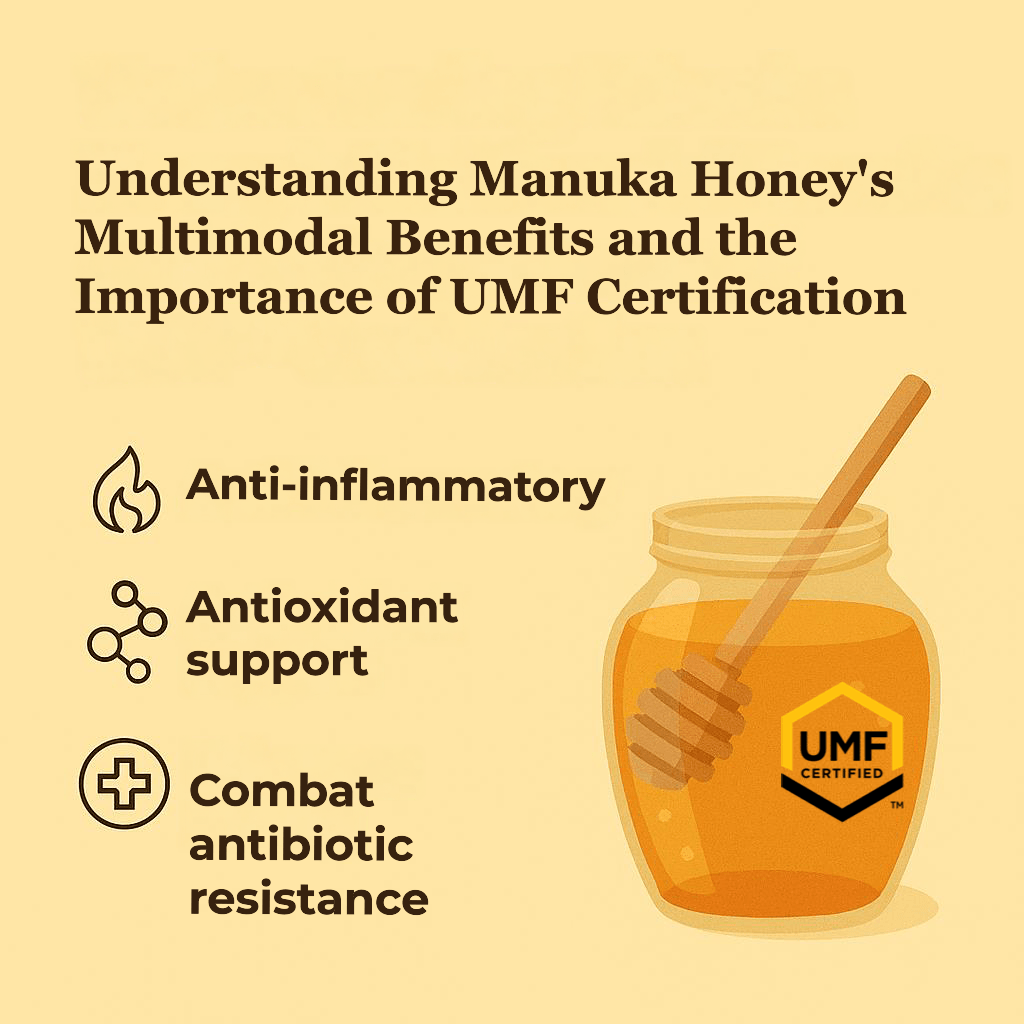
Unlike single‑target interventions, mānuka honey exhibits complementary effects across multiple biological pathways. The Cureus review reports evidence supporting roles in:
- Anti‑inflammatory modulation, helping to regulate excessive inflammatory responses
- Antioxidant activity, supporting cellular resilience in stressed tissue environments
- Supportive wound environments, conducive to tissue repair and recovery
These effects are understood to operate alongside the original and well‑documented antibacterial properties of certain honeys. Together, this constellation of mechanisms helps explain why honey remains relevant in wound‑healing research despite the availability of modern synthetic alternatives.
For nutrition scientists and clinicians alike, this reinforces a key principle: complex biological systems often respond best to interventions that operate across more than one pathway, particularly in contexts involving inflammation, oxidative stress, and tissue regeneration.
Why Authenticity and Consistency Determine Scientific Value
While interest in mānuka honey continues to grow, research outcomes are only as reliable as the materials being studied.
In natural products science, variability in source, composition, and botanical origin can significantly affect biological outcomes. Without independent verification, such variability undermines:
- Reproducibility of research findings
- Confidence in clinical translation
- Alignment between published evidence and real‑world use
For nutrition experts and healthcare professionals evaluating evidence, this distinction is critical. Studies conducted with authenticated mānuka honey are not equivalent to outcomes derived from unverified or mislabelled products, even when generic terminology is used.
The Role of UMF™ Certification in Scientific Alignment
UMF™ certification was developed to address precisely this challenge.
As the only independent certification system that verifies mānuka honey’s identity, quality markers, and New Zealand origin, UMF™ provides a foundation of trust that supports both scientific integrity and professional confidence.
UMF™ certification confirms:
- The presence of key chemical markers associated with genuine mānuka honey
- Consistency and traceability, supporting reproducible research outcomes
- Alignment between laboratory evidence, clinical investigation, and consumer products
For researchers, dietitians, clinicians, and formulators, this verification helps ensure that conclusions drawn from the literature remain applicable beyond the academic setting.
Implications for Nutrition and Health Sciences
From a broader nutrition science perspective, mānuka honey offers an instructive case study in the importance of verification in natural products research.
As interest grows in bioactive foods, functional ingredients, and complementary therapies, independent certification systems play a central role in:
- Distinguishing evidence‑based products from unverified claims
- Supporting regulatory, academic, and clinical decision‑making
- Maintaining public trust in nutrition and health research
In this context, UMF™ certification does not replace scientific inquiry — it supports it, ensuring that what is studied, prescribed, and consumed reflects what the evidence actually describes.
The growing body of research on mānuka honey, including recent systematic reviews, continues to highlight its multimodal biological activity and relevance in healing research. Yet the value of this evidence depends fundamentally on authenticity and consistency.
For the global nutrition and health community, independent verification is not optional — it is essential.
UMF™ certification provides a crucial bridge between scientific evidence and real‑world application, reinforcing trust in both research outcomes and professional practice.
Reference
Schils M, Duveau C, Van Doornick G, et al. (2026). Application of Honey Dressing in the Management of Postoperative Wounds, Ulcers, and Burns: A Systematic Review. Cureus, 18(4): e106501. https://doi.org/10.7759/cureus.106501


