
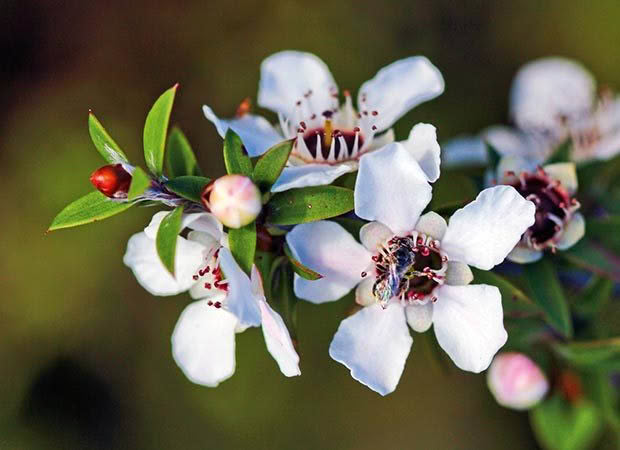
New Zealand’s Mānuka (Leptospermum scoparium) is a plant as iconic as the honey it produces. Known for its medicinal properties, Mānuka honey owes its potency to the unique flowering pattern of the plant. But what exactly influences this crucial process? Let’s explore the factors that shape the blooming cycle of the Mānuka flower and its significance for beekeepers and the environment.
The Mānuka Flower: Nature’s Clock
Mānuka can be found thriving in various environments across New Zealand, from the warmer coastal regions to the cooler, higher-altitude inland areas. The timing of its flowering is far from uniform, varying depending on location.
- North Island: The Mānuka tends to bloom early here, from November through January.
- South Island: Cooler temperatures push the flowering season slightly later, from December to February.
These regional variations have a significant impact on beekeepers, who must strategically position their hives to match the blooming cycles and maximize honey production.
What Drives Mānuka’s Flowering Pattern?
Several factors affect when and how densely Mānuka flowers:
- Climate and Geography: Warmer regions see earlier and more extended flowering periods, while cooler, higher-altitude areas may experience shorter seasons.
- Soil and Weather: The Mānuka thrives in poor, acidic soils, but the flowering can be influenced by the amount of rainfall, sunlight, and even wind conditions.
As climate change introduces more unpredictable weather patterns, understanding these factors is becoming increasingly critical for both the honey industry and environmental conservation.
A Beekeeper’s Guide to the Bloom
For New Zealand’s beekeepers, timing is everything. The Mānuka’s flowering season only lasts 4-6 weeks, meaning that a missed window could result in lost honey yield. Careful monitoring of climate data, along with local knowledge, helps ensure bees are at the right place at the right time. However, shifts in climate could mean that traditional knowledge may not always align with new flowering cycles in the future.
Ecological Importance Beyond Honey
Mānuka flowers are more than just a resource for honeybees; they play a vital role in supporting New Zealand’s biodiversity. The flowers provide food for various insects, making them crucial for local ecosystems. This makes the flowering period not only important for honey production but for environmental health.
Supporting the Future of Mānuka
As more people become aware of the link between Mānuka flowers and honey production, there’s also a growing push to involve the public in understanding these cycles. Citizen science programs, where locals can track and record Mānuka blooms in their area, are helping researchers gather more precise data.
Understanding these flowering patterns helps everyone—from beekeepers to conservationists—better manage and protect this precious resource. So the next time you taste a spoonful of Mānuka honey, remember the complex dance of nature that made it possible!
Get involved by contributing to the tracking of Mānuka’s blooming patterns through initiatives like the NatureWatch NZ platform, or check out the Science Learning Hub for more information on how you can support sustainable Mānuka management.


