
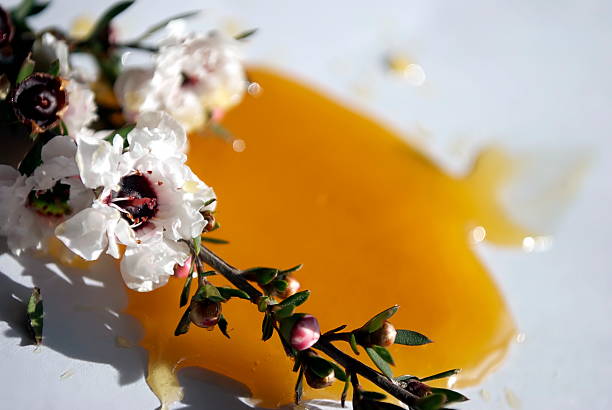
For decades, mānuka honey has been best known for its remarkable antibacterial properties. Much of this reputation stems from methylglyoxal (MGO), a naturally occurring compound found at uniquely high levels in authentic mānuka honey.
Yet according to researchers working in the field, the most exciting discoveries may still lie ahead.
As scientists investigate how food can support health in a world increasingly focused on prevention, resilience and longevity, mānuka honey is emerging as more than simply a natural sweetener. It is increasingly being viewed as a complex functional food containing thousands of naturally occurring compounds that may work together to support human health.
In a recent expert discussion, Dr Megan Grainger reflected on her journey studying mānuka honey, beginning as a first-year science student helping investigate the compound responsible for its antibacterial activity.
That early work led her to one of the most important discoveries in mānuka honey science: the role of MGO.
Please see link to Interview here.
Understanding MGO: The Compound That Changed Mānuka Honey Research
The story begins with the mānuka tree (Leptospermum scoparium).
Its nectar contains a natural compound called dihydroxyacetone (DHA). During honey maturation and storage, DHA gradually converts into methylglyoxal (MGO), the compound now recognised as a major contributor to mānuka honey’s antibacterial activity.
The discovery of MGO helped scientists explain why mānuka honey demonstrated antimicrobial activity that differed from conventional honeys.
However, researchers now believe MGO may be only part of the story.
Recent scientific investigations suggest that when MGO is isolated and studied separately, it does not appear to deliver the same level of activity seen when it exists naturally within mānuka honey itself.
This finding is leading researchers to ask an important question:
What if mānuka honey’s health-supporting properties are not driven by one compound, but by an entire bioactive ecosystem?
A Bioactive Matrix: Why Whole Mānuka Honey May Be Greater Than the Sum of Its Parts
One of the most significant developments in mānuka honey research is the growing appreciation of its extraordinary chemical complexity.
Recent analytical work has identified approximately 2,300 compounds in mānuka honey, compared with around 90 compounds in clover honey.
More than 50 of these compounds have already been identified as biologically active.
These include:
- Phenolic compounds
- Phenolic acids
- Flavonoids
- Organic acids
- Oligosaccharides
- Unique mānuka-derived phytochemicals
Many of these compounds exhibit antioxidant, anti-inflammatory or antimicrobial activities in laboratory studies.
Researchers increasingly describe mānuka honey as a bioactive matrix, where multiple compounds interact and potentially enhance one another’s effects.
Rather than acting independently, these compounds may work synergistically to influence biological pathways related to inflammation, immunity and microbial balance.
This concept mirrors a broader trend in nutritional science. Increasingly, researchers are recognising that whole foods often provide benefits that cannot be replicated by isolated compounds alone.
The message is simple:
The power of mānuka honey may reside not in a single molecule, but in the natural package that nature created.
From Wound Care to Whole-Body Health
Historically, most mānuka honey research focused on wound healing.
Hundreds of scientific papers and numerous clinical studies have demonstrated its ability to support wound care through antibacterial action, moisture retention and modulation of inflammation.
But these findings have inspired scientists to explore a broader question:
Could the same mechanisms that help support tissue healing also benefit other areas of human health?
This question has opened several exciting new research pathways.
Areas currently attracting scientific attention include:
- Upper respiratory health
- Immune system support
- Digestive and gut health
- Inflammation regulation
- Oxidative stress management
- Healthy ageing and longevity
While many of these areas remain under active investigation, the volume of emerging research continues to grow.
Gut Health: Supporting the Microbiome and Digestive Resilience
Among consumers, gut health has become one of the most discussed areas of nutritional wellbeing.
This aligns closely with emerging mānuka honey research.
Scientists are investigating whether mānuka honey may support digestive health through several complementary mechanisms.
Research suggests mānuka honey contains compounds that may act as prebiotics, helping nourish beneficial gut bacteria and support microbiome diversity.
At the same time, laboratory studies indicate it may help limit the growth of certain potentially harmful microorganisms, including Helicobacter pylori, a bacterium associated with gastric ulcers and stomach inflammation.
Researchers have also reported that mānuka honey may influence inflammatory signaling pathways involved in digestive health.
Together, these findings suggest mānuka honey may contribute to what researchers describe as digestive resilience by helping support a balanced microbial environment and healthy inflammatory responses.
Although more human clinical research is needed, gut health remains one of the most promising frontiers in mānuka honey science.
Immune Resilience: Creating the Conditions for Better Defense
Consumers commonly associate mānuka honey with immune support, particularly during winter or periods of increased stress.
Scientists are now working to better understand the biological foundations behind these observations.
Emerging studies suggest that compounds within mānuka honey may help support immune function through two interconnected pathways:
Supporting Natural Immune Responses
Research indicates certain bioactive compounds may help regulate immune activity, supporting the body’s ability to respond appropriately to challenges.
Modulating Excessive Inflammation
Chronic or excessive inflammation can place strain on the body.
Antioxidant and anti-inflammatory compounds found in mānuka honey are being investigated for their potential role in helping regulate these responses.
The ability to simultaneously support immune defense while helping manage unnecessary inflammatory activity is particularly interesting to researchers exploring nutritional approaches to resilience and long-term health.
Healthy Ageing: A New Frontier for Mānuka Honey Research
Perhaps the most intriguing area emerging from current mānuka honey science is its potential relevance to healthy ageing.
As life expectancy increases globally, attention is shifting from lifespan alone to health span: the years of life spent in good health.
A growing body of scientific literature links low-grade chronic inflammation with many age-related health challenges.
Researchers are therefore increasingly interested in foods that may help support healthy inflammatory balance over time.
Dr Grainger highlights that many bioactive compounds found in mānuka honey are being investigated for their ability to help regulate inflammatory pathways and oxidative stress.
While definitive human clinical evidence is still developing, this area represents one of the most promising opportunities for future research.
The idea is not that mānuka honey is a cure or treatment.
Rather, it may be part of a broader dietary pattern that helps support:
- Resilience
- Recovery
- Digestive comfort
- Immune balance
- Overall quality of life
As people seek practical ways to remain healthier for longer, these questions are becoming increasingly important.
Why Researchers Want More Human Clinical Trials
Despite the excitement surrounding current findings, scientists remain clear about one important limitation.
Many studies investigating emerging benefits of mānuka honey have been conducted in laboratory models or animal studies.
Researchers believe the next major milestone is the expansion of human clinical trials.
More clinical research would help answer important questions such as:
- Which populations benefit most?
- What amounts are most effective?
- Which health outcomes show the strongest evidence?
- How does regular consumption influence long-term health markers?
These studies will be critical for translating scientific discoveries into evidence-based dietary recommendations.
Making Mānuka Honey Part of Everyday Life
One reason researchers are enthusiastic about mānuka honey as a functional food is its practicality.
Unlike supplements that require additional routines, mānuka honey can be easily incorporated into everyday eating habits.
Popular options include:
- A teaspoon straight from the spoon
- Stirring into tea
- Adding to porridge or oats
- Blending into smoothies
- Using in salad dressings
- Pairing with yoghurt or fruit
This ease of use aligns with an important principle in nutrition science:
Healthy habits are most sustainable when they are simple, enjoyable and fit naturally into daily life.
Key Takeaways
✅ Mānuka honey contains a uniquely complex mix of approximately 2,300 naturally occurring compounds.
✅ MGO remains an important contributor to antibacterial activity, but researchers increasingly think the whole honey matrix plays an important role.
✅ Emerging research is exploring benefits related to gut health, immune resilience, inflammation regulation and healthy ageing.
✅ Scientists believe the interaction between multiple bioactive compounds may create effects greater than any single compound alone.
✅ More human clinical trials are needed to confirm findings and strengthen evidence-based recommendations.
✅ Mānuka honey is increasingly being studied as a functional food that can easily be incorporated into everyday dietary habits.
Frequently Asked Questions
Is mānuka honey only beneficial for wound care?
No. While wound care remains the area with the strongest clinical evidence, researchers are increasingly investigating potential benefits related to digestive health, immunity, inflammation and healthy ageing.
What makes mānuka honey different from regular honey?
Mānuka honey contains naturally elevated levels of compounds such as methylglyoxal (MGO) and thousands of additional naturally occurring compounds that contribute to its unique composition.
Can mānuka honey support gut health?
Emerging research suggests mānuka honey may help support gut health through prebiotic effects, microbial balance and modulation of inflammatory pathways. More human clinical research is still needed.
Does mānuka honey help support the immune system?
Studies indicate that compounds found in mānuka honey may help support healthy immune responses and inflammatory regulation. However, research in this area continues to evolve.
Why is healthy ageing becoming an important area of mānuka honey research?
Scientists are increasingly interested in nutritional approaches that help maintain quality of health as people live longer. Mānuka honey’s antioxidant and anti-inflammatory properties make it an interesting candidate for further investigation.


